
Digital Rights Management, or DRM, is a method used in video games with a goal to stop them from being illegally copied and shared. While DRM is designed to prevent piracy, its effectiveness is widely debated and in some cases, even being described as counterproductive. Moreover, it often comes with a serious downside of negatively affecting your, legitimate user, privacy.
We’d like to dive deeper and explore just how exactly DRM might be doing more harm than good, especially when it comes to protecting your personal information.
Quick reminder – what’s DRM?
DRM is like a virtual lock on a game. It’s meant to ensure only people who have legally purchased the game can play it. But unlike a lock on a physical item, DRM can do a lot more than just protect the product. It often requires an internet connection, monitors your computer, and gathers data about how you use the game.
For example, imagine buying a game that requires you to log into a special service every time you want to play it. If you’re not connected to the internet, the game won’t let you play, even if you only want to enjoy a solo campaign. This system might seem simple at first, but behind the scenes, it could be doing a lot more than you realize.
How does it invade your privacy?
Unfortunately, in plenty of ways. Let’s take a look at some of them one by one.
Constant data collection – many DRM systems force you to stay connected to the internet while you play, even for games that don’t have any online features. This constant connection allows the game company to track a wide range of information about you. They might gather details like:
- Your username and email address.
- Your location, based on your IP address.
- How long you play and when you log in.
- What kind of computer or console you’re using.
Let’s say you’re playing a single-player game. Even though there’s no real reason for the game to connect to the internet, DRM systems can monitor your playtime and send data back to the company. While the company might claim they’re using this data to “improve the experience,” it’s often unclear exactly how much data they’re collecting, how long they’ll keep it, and who might have access to it.
Involvement of outside companies – some DRM systems rely on third-party companies to handle the verification process. For instance, the game you buy might use a service that scans your computer to ensure you haven’t tampered with the files or installed pirated software. This means your data isn’t just being sent to the game’s developers but also to a separate company you may never have heard of.
Once your data is in the hands of multiple companies, it becomes harder to know how it’s being handled or if it’s being kept safe. If any of these companies suffer a data breach, your personal information could be exposed, and you might never know how it happened or what information was leaked.
Scanning your device – DRM systems can go as far as scanning your computer or console for anything that seems suspicious. They’re typically looking for software that could bypass their restrictions, but in doing so, they’re also digging into your device in ways that feel invasive. This means DRM could be peeking at other programs or files on your system, all in the name of stopping piracy.
Imagine buying a game, and to make sure it’s legitimate, the DRM system performs regular scans of your device. While it might not be searching through your personal photos, the very idea that it has access to parts of your computer unrelated to the game feels like a violation of your privacy. And who’s to say this access couldn’t be exploited by someone with bad intentions?
Always online requirements – One of the most frustrating things about DRM is when it forces you to stay connected to the internet at all times, even for games that don’t need an online connection. Picture this: you’re on vacation or somewhere without reliable internet, but you want to play the game you paid for. Unfortunately, if you’re not online, the DRM system won’t let you play.
Even more worrying, this constant internet connection allows the company to track exactly when and how often you’re playing. It’s not just about verifying you own the game anymore – it’s about monitoring your habits. The more often your data is being transmitted, the higher the chances that it could be intercepted or leaked.
Why do gamers dislike it?
Well, for once, it breaks trust – when a game company collects too much information or watches your gaming behavior too closely, you might start questioning why they need to know so much about you just to verify you bought the game. DRM can make players feel like they’re constantly being watched, which can lead to a lack of trust between them and developers.
Another thing is that DRM can introduce serious security vulnerabilities to your device. Imagine you install a game, and along with it, the DRM software comes with its own set of risks. If that system is poorly designed, it could be a gateway for hackers to access your computer. DRM, designed to protect games, might end up exposing your system to malicious attacks.
Of course, there are also data breaches and leaks. Game companies store the data they collect from DRM systems on servers. These servers are tempting targets for cybercriminals. If the company’s servers are hacked, your personal information—like your email address, gaming history, and possibly even more sensitive data—could be leaked. And if you’ve shared payment information with these companies, the risks are even higher.
Imagine waking up one day to find out that your personal data was leaked because a company failed to secure its DRM system properly.
Lastly, DRM simply puts huge limits on the ownership of your games. The games that you’ve paid for and invested your time in. If the company behind the game decides to shut down its DRM servers or services, you could lose access to a game you legally purchased. Essentially, DRM can turn a game you thought you owned into something you’re just renting with a bunch of strings attached.

Solution? Choosing DRM-free games
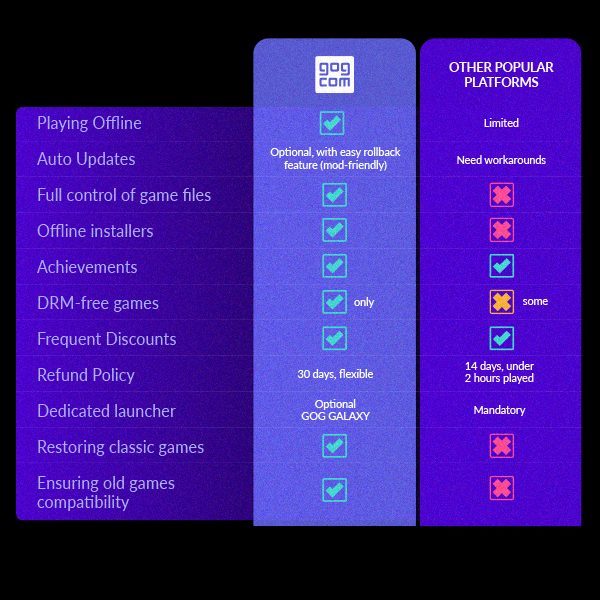
The good news is that you can avoid many or even all of these issues by choosing to buy DRM-free games. DRM-free games don’t come with any of the restrictions or privacy concerns that DRM systems impose. You own the game outright, without needing an internet connection to verify ownership, no third-party tracking, and no invasive scanning of your device. You can enjoy your purchases without worrying about data collection or losing access if servers shut down. In short, by opting for DRM-free titles, you get a smoother gaming experience while maintaining full control over your privacy.
Conclusion (TL;DR)
DRM is often presented as a necessary tool to stop piracy, and while this itself is very debatable, it can also cause far more harm than it prevents. By collecting too much data, scanning your computer, and requiring constant internet connections, DRM can feel like an invasion of your privacy. And while game companies claim they’re just protecting their work, it’s hard to ignore the fact that DRM systems can hurt players far more than they protect developers.
In the end, DRM shifts the burden onto the consumer, limiting their control over the games they buy and putting their personal data at risk. Before buying a game, it’s worth considering how the DRM might affect your privacy and whether that’s a price you’re willing to pay.





forum Start the Discussion